Raising chickens has become more and more popular with Pennsylvania homeowners, especially in rural and suburban areas. In order to raise chickens on your property, there are a few things you’ll need to consider. First, you’ll need to determine how many chickens you want and can keep under local regulations, build a high-quality chicken coop with Glick Structures, and then purchase the proper amount of food and water. Below, we’ve explained some important things to do to help you get started with raising chickens.
Check Local Regulations
In Pennsylvania, regulations for raising chickens are determined by local municipal ordinances. Some townships regulate the number of chickens per acre of land, and some have set boundaries. Manheim Township, for example, permits up to 12 chickens with approval from the board of commissioners. Some municipalities require permits and inspections before raising chickens, and you’ll likely need a building permit before you build your chicken coop with us.
Generally, though, local regulations limit the number of chickens to 4-6 hens per flock, and roosters are prohibited. Before raising chickens, we recommend checking with your local municipal departments and HOAs for regulations to follow and permit requirements.
Build Your Chicken Coop
The most important item you’ll need to raise chickens is your chicken coop. Your chickens will need a secure coop that protects them from predators and Pennsylvania’s weather, providing them with a safe place to roost and lay eggs. Glick Structures has a few different chicken coop styles to ensure your flock is happy, healthy, and safe from hawks, foxes, and raccoons. They come standard with pressure-treated pine, stainless steel fasteners, a tongue-and-groove exterior with portable chicken ranges, and multiple customization options. Your chicken coop will be durable, sturdy, and elevated off the ground to keep it dry, ensuring it meets your chickens’ needs.
A-Frame Chicken Coop
Our A-Frame Chicken Coop has a classic design that matches any home’s style. It’s simple and efficient with a compact design, which is ideal for smaller yards. The sloped roof allows rain to easily roll off it, allowing this structure to blend practicality with function for you and your chickens.
Dutch Chicken Coops
Dutch Chicken Coops give a classic, rustic farm style with the gambrel roof pitch. It maximizes vertical height for roosts and nesting boxes, giving more interior space so the chickens are less stressed. We have four different sizes available for this coop, so you can choose one depending on your flock and property requirements. We recommend having 3-4 square feet per chicken.
Quaker Chicken Coops
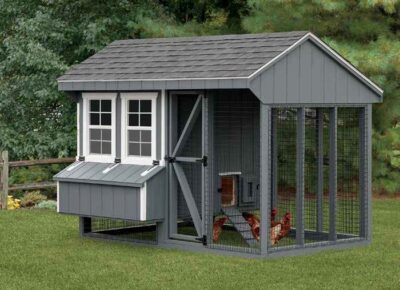
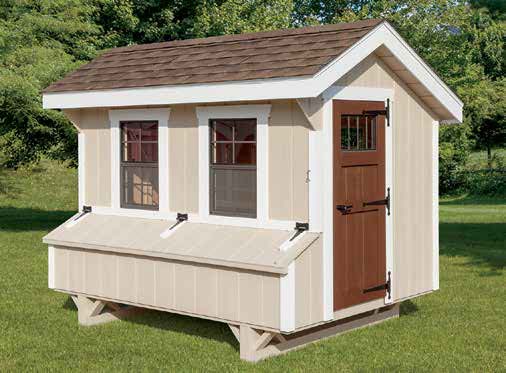
Our Quaker Chicken Coops have a roof overhang to add architectural style while protecting the external nesting boxes from weather elements. The unique roofline provides extra headroom for the chickens to roost. These coops come with windows to provide extra ventilation. Our sizes range from 3×3 to 7×12, depending on how many chickens you’re raising.
Combination Chicken Coops
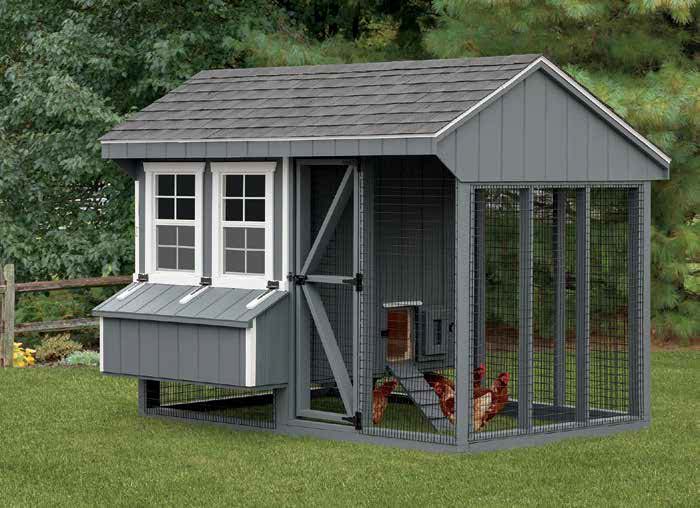
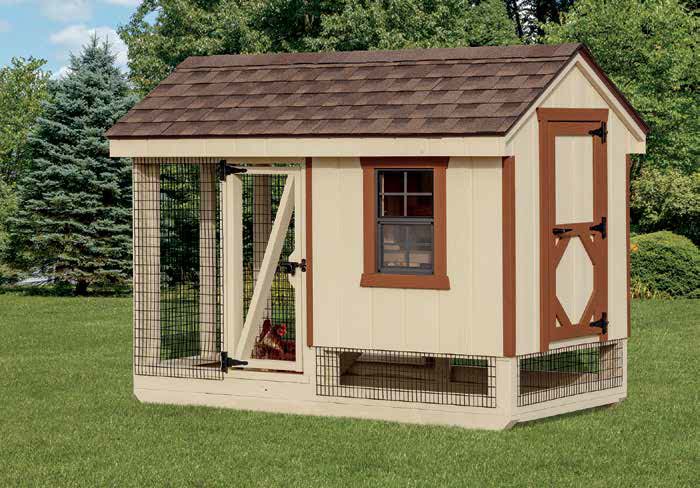
Our Combination Chicken Coops come with either an A-frame or quaker roofline. This style combines the roosting area with a run, allowing the chickens to graze in a safe space. The run is made with high-quality chicken wire to protect them from predators so they can walk around more freely. The indoor area is for roosting and laying eggs, while the run is ideal for grazing. Our Quaker Combination Chicken Coops are available in sizes 4×8 to 7×30.
Features For a Chicken Coop
The most important features to have in your chicken coops are roosting bars with perches for sleeping and nesting boxes for laying eggs. Roosts should be at least 2 feet off the ground and have enough space for 6-10 inches in between each chicken. For nesting boxes, hens prefer to have individual ones for privacy, and they should be one square foot big. Our chicken coops come standard with roosts and nesting boxes, and can be upgraded to have more.
Customization Options
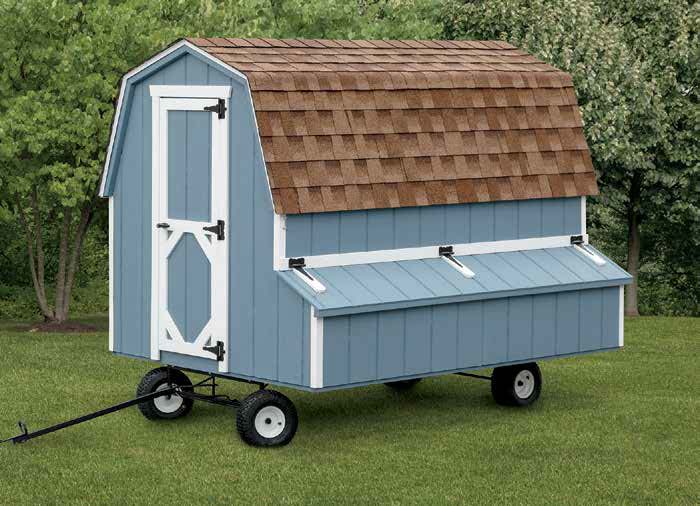
Our customization options for chicken coops include an easy-to-clean epoxy floor, heated roosts, gable vents, litter trays, automatic doors, electricity, feed boxes, a solar package, and more, depending on your needs. For extra protection from predators, we’ve found it best to install wire over the windows so they can’t get inside. We also have poly nest boxes and exhaust fans for added durability and ventilation. If you’d like your chickens to graze fresh grass consistently, then we can add wheels to your coop for easy transportation.
Ventilation is Key
Ventilation is vital to ensure a comfortable environment inside the chicken coop. It will reduce moisture, mold, and ammonia buildup, which can cause the chickens to get sick. Having ventilation will improve air quality to keep your chickens healthy. You can add ventilation with windows and vents. Windows will provide natural light while allowing air to circulate, which is beneficial for chickens’ sleep cycles. Any vents you add to the coop should be covered with chicken wire for extra protection.
Get Food and Water
Your chickens need to have good food and water to remain healthy. They’ll need a consistent supply of fresh water; one quart per four chickens is standard. In Pennsylvania, it can get cold during the winter, so we recommend getting a heated waterer to keep a consistent flow of water to the chickens. For food, chickens should be fed in the morning and evening. Add in a ½ cup of chicken feed that is high in protein and vitamins A and E, and low in carbs and fat. Feeders and waterers should be hung off the ground so they remain fresh.
Eggs
The quality of food you give them will determine the quality of eggs they lay. Sometimes, if the chicken is not getting enough protein or calcium, they will eat their own eggs. If one breaks, and they get the taste of it, your chicken may be more habituated to eat their eggs. Make sure you’re collecting eggs daily to reduce the risk of breaking. To give them more calcium, you can add grit, like crushed oyster shells, into their feed.
Raise Healthy Chickens with Glick Structures
Raising chickens is easy with Glick Structures. Our high-quality, durable chicken coops are designed to keep them happy, healthy, and protected from predators. With many styles to choose from and multiple customization options, you’ll be able to create a custom chicken coop with all the features you require. Check out our in-stock inventory to see what’s ready for delivery today. If you’d like a custom chicken coop, contact us today to get started!